
Feature Overview
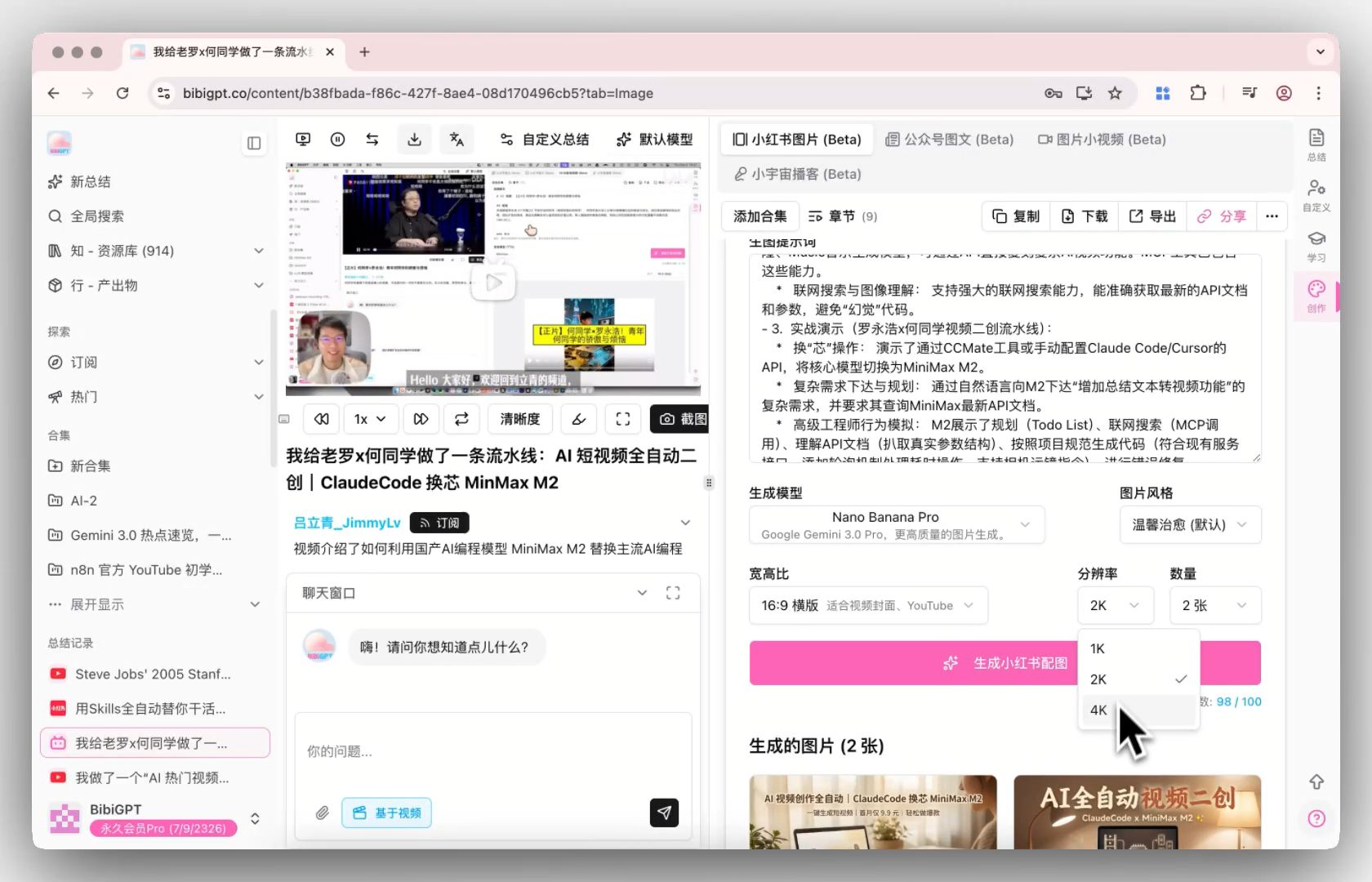
BibiGPT’s “AI Image Generation” function has received an important update, aimed at meeting creators’ customization needs for image size and quality. In the “Creation Panel” on the video detail page, users can now freely adjust image resolution (supporting up to 4K) and aspect ratio (covering mainstream ratios such as 9:16 and 16:9) based on the selected model (such as Nano Banana Pro or Seedman 4.5). This improvement makes AI images generated based on videos clearer and suitable for various social media platforms. Here is an example of the function interface: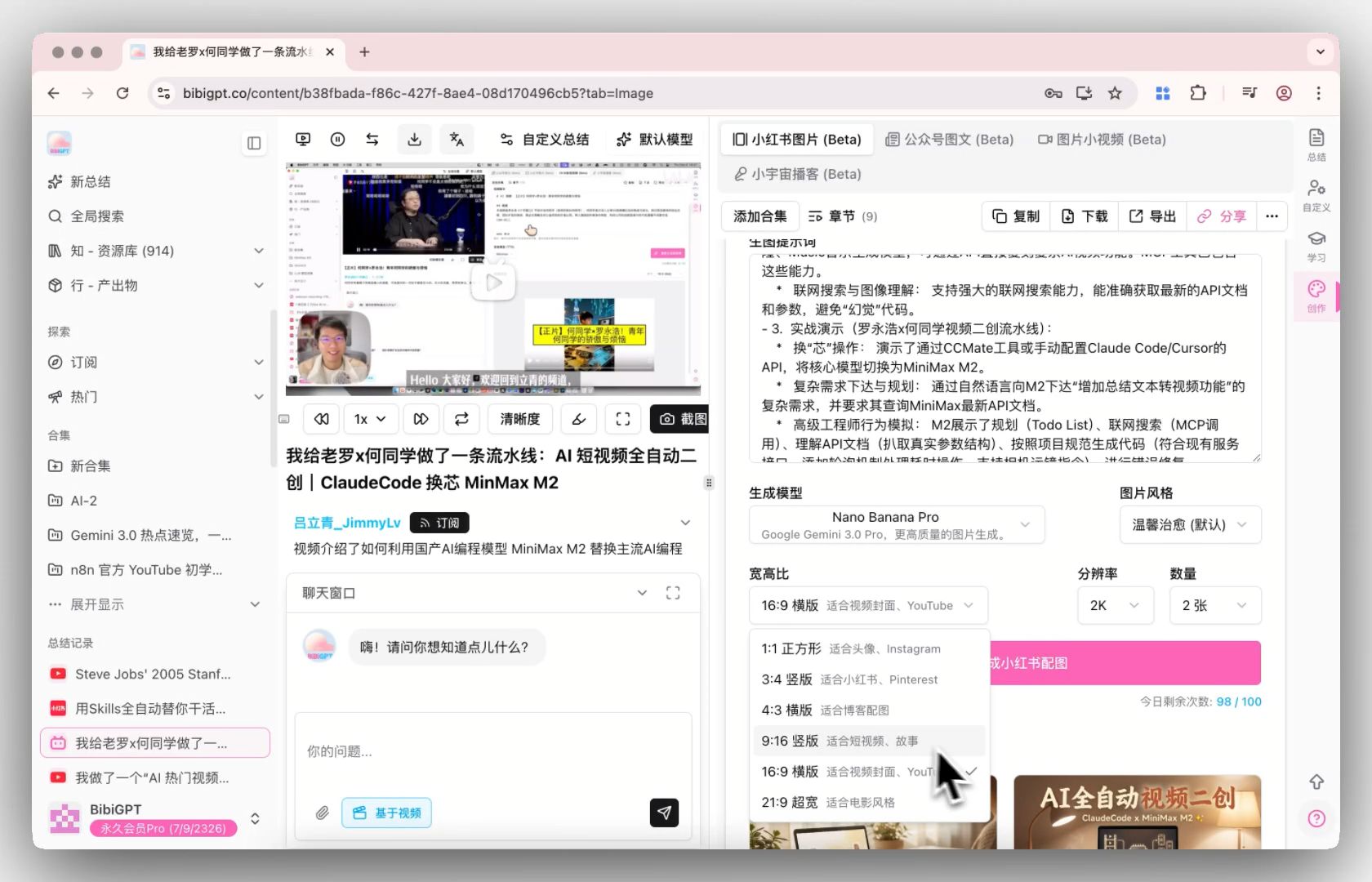
Solved Pain Points
“I want to generate accompanying images based on video content, but previous image ratios were limited and could not adapt to the needs of vertical mobile screens (9:16) or horizontal computer screens (16:9). Also, sometimes the generated images were not clear enough to meet my requirements as a creator for high-definition quality (such as 2K/4K).”Core Features
- BibiGPT’s “AI Image Generation” function has been updated for creator customization needs.
- In the “Creation Panel,” users can adjust resolution (up to 4K) and aspect ratio (9:16, 16:9, etc.) for selected models.
- AI-generated images are now clearer and better adapted to various platforms.
- Supports selecting 1K/2K/4K high-definition resolution for specific models (like Nano Banana Pro) and provides multiple aspect ratio options (1:1, 3:4, 9:16, etc.) for precision visual material customization.
Feature Highlights
BibiGPT updated the AI image generation function, now supporting the selection of 1K/2K/4K high-definition resolution for specific models (such as Nano Banana Pro) and providing a variety of aspect ratio (1:1, 3:4, 9:16, etc.) options, letting creators precisely customize visual materials suitable for different platforms.Applicable Scenarios
- Generating images based on video content with specific aspect ratio or high-definition (2K/4K) requirements.